Last month, as part of a class, I read The Making of Biblical Womanhood by Beth Allison Barr. Barr is a professor of history at Baylor University who specializes in women’s history, church history, and the history of medieval and early modern England.
The book is a fascinating examination of patriarchy, which Barr defines as “a general system that values men and their contributions more than it values women and their contributions.” As the author narrates the history of patriarchy from the very origins of human civilization all the way through the modern era, she specifically focuses on how patriarchy intersects with the Bible and traces the development of “Christian patriarchy” over the centuries up to the present day.
I found it to be quite an enlightening resource. She offers a look at the creation story in early Genesis, contending that patriarchy was not part of God’s original vision for humankind, but it only slithered into the human experience after the Fall. She sees a correlation here with ancient history, describing how as human civilization began to develop with the rise of agriculture, “[b]oth male labor and male power began to be associated with property ownership and the accompanying agricultural work. This led to boys being favored over girls for inheritance and to women becoming increasingly dependent on males who were property owners or agricultural laborers.” As a result, “[w]omen became increasingly dependent upon men as agricultural communities became the heartbeat of human civilization.”
Interestingly, with this in mind, Barr notes how “when God told Eve she would be under her husband’s power, God simultaneously told Adam that agricultural labor would be necessary for human survival.”
“Patriarchy, according to both the Bible and historical record, emerged alongside the emergence of agricultural communities.”
Barr contends that in Genesis 3, rather than prescribing a God-ordained system of male hierarchy, God is actually describing the consequential effects of human brokenness and rebellion.
As the biblical story moves forward, we see how patriarchy continues to shape the narratives as well as the storytellers. According to Barr, “[t]he patriarchy that continues to appear in biblical text is a mere accommodation to the reality of the times and culture; it is not a reflection of the divine ideal for humanity.”
However, despite the inevitable presence of patriarchal attitudes and actions within the biblical narrative, it’s startling how many stories and examples exist within the Bible that actually undermine this perspective. Barr catalogues numerous examples of women leading, teaching, and prophesying all throughout the biblical story, subverting conventional gender roles.
My one critique of the book is that when she deals with 1 Corinthians 14:34-35, she only offers one possible interpretation of this passage. While I appreciate her perspective, I would have preferred for her to at least acknowledge other views that exist, including the one I advocate for in this essay.
However, I found that her history pedigree especially aided her treatment of the “household code” passages in the New Testament (Ephesians 5:22-6:9, Colossians 3:18-4:1, and others). Her knowledge of Roman patriarchal structure (“paterfamilias”) was rather illuminating and helps readers understand how subversive Paul’s instructions were for these early Christians.
“The New Testament household codes tell a story of how the early church was trying to live within a non-Christian, and increasingly hostile, world. They needed to fit in, but they also needed to uphold the gospel of Christ. They had to uphold the frame of Roman patriarchy as much as they could, but they also had to uphold the worth and dignity of each human being made in the image of God. Paul gave them the blueprints to remix Roman patriarchy.”
This is an essential point that deserves reflection. Consider the not-so-hypothetical example of a community of Arab Christians worshipping together within an Islamic state. Wisdom would suggest that within such a patriarchal culture, the lives and practices of these Christians must look radically different than it would in other contexts. The gospel has always been (and must always be) contextualized. Because every culture is unique.
And that includes ancient Greco-Roman culture. What we have in the New Testament is an inspired record of how the earliest churches grappled with how to live forward in God’s new creation while also dwelling within Roman society. Thus, for example, we have instructions regarding slave-master relationships (such as Eph. 6:5-8). Barr asks:
“When we rightly understand that biblical passages discussing slavery must be framed within their historical context and that, through the lens of this historical context, we can better see slavery as an ungodly system that stands contrary to the gospel of Christ, how can we not then apply the same standards to biblical texts about women?”
Good question.
The greatest strength of Barr’s work is her historical survey of church history. She offers plenteous examples of women serving in church leadership roles in every era of church history (“Historically, women have flourished as leaders, teachers, and preachers—even in the evangelical world.”). She traces how Christian patriarchy radically shape-shifted through the medieval era into the Protestant Reformation. She then delineates the sordid history of patriarchy influencing translation choices in modern versions of the Bible.
It’s an eye-opener, for sure. And worth your time and attention.
One of the oft-discussed topics within the evangelical world is on the subject of “Should women preach within the context of a worship gathering?” At the crux of this conversation are two particular passages in the New Testament which I will address below (1 Corinthians 14:34-35 and 1 Timothy 2:11-15).
Over the years, this topic has come up quite frequently in friendly conversation. Each time I find myself recommending numerous resources. However, there is a wide range of issues related to this discussion, and there is also a great diversity of thought on each of these particular issues. And because I have yet to find one single essay that represents my own humble perspective, I decided it would be best for me to write one of my own.1
A Few Opening Thoughts
What I will lay out here is purely my own point of view. It is not the official position of the great church I pastor, Village Church in Burbank, California. One of the distinctives of Village Church is that we unite around our common allegiance to Jesus Christ, and when it comes to non-essential, secondary matters pertaining to theology we seek to be open-handed and willing to accommodate and respect a broad range of opinions and convictions. Therefore as the Lead Pastor of Village, knowing that some reading this will be members of my own church, I feel it is necessary to emphasize that right away. Village Church purposefully does not have an “official position” on this issue.2
Secondly, this is one of those subjects in which we need to assume a posture of humility, grace, and respect. Too often in theological conversations, we unfairly label and caricaturize those who hold opposing views. So, for example, some who hold to the “complementarian” position (i.e. that women should be prohibited from preaching) may sometimes regard those whom they disagree with as holding an “unbiblical view” or a “liberal view.” Likewise, many of those who hold to the “egalitarian” position (i.e. that women should have opportunities to preach) can be prone to labeling those whom they disagree with as “misogynistic.”
Granted, there are egalitarians who deny the authority and inspiration of scripture. There are also complementarians who happen to be misogynistic. However, it would be horribly unfair and inaccurate to assume these statements to be true of everyone who holds the opposing viewpoint. It is my firm conviction that it is possible for sincere seekers of truth to arrive at different conclusions on this issue in an honest effort to embody faithfulness to the vision of Christ.
Whether or not we are aware of it, every reader of the Bible approaches the text looking through a particular lens. We each come from a certain social, cultural, ethnic, and religious context that shapes how we approach and interpret scripture. Healthy theological engagement involves growing to understand our own lens as well as being willing to look through the lens of others. It has been my experience that when people have only ever been exposed to one particular Christian tradition, often they are not even aware that other positions exist, let alone understand the reasons other believers hold those positions.
I will state here at the beginning that I unequivocally hold to the view that women should be allowed to preach. Below, I will say more about my own “lens” as well as the reasons I hold my position. But let me hasten to add that my goal is not to change minds or to win anyone to the egalitarian “side.” My goal is simply to help others see that it is possible for someone to arrive at this position while also clinging to the authority and inspiration of scripture.
Cultural Context and the Bible
As Christians, we confess that the Bible, both Old and New Testaments, is inspired (or “God-breathed”). We must also recognize that every passage also emerges from within a particular social-cultural context (the Jewish context as well as the larger Greco-Roman society). The Bible is, therefore, shaped by those contexts. As we seek to interpret passages like 1 Corinthians 14:34-35 and 1 Timothy 2:11-15 (as I will attempt below), it’s imperative that we acknowledge that the instructions of the New Testament epistles are both written from and applied within particular contexts and situations.
A simple example is the collection of instructions within the New Testament letters regarding slavery (see Eph. 6:5-9, Col. 3:22-24, 1 Timothy 6:1-2, Titus 2:9-10, & Philemon). In these passages we find no explicit repudiation of slavery. However, we do find culturally-conditioned teaching on how to live out the gospel within the current social structure of ancient Greco-Roman society. In the modern world, Christians now universally recognize that (1) the institution of slavery is evil and dehumanizing, and (2) the New Testament instructions related to slavery are culturally-conditioned.
Similarly, if we are to properly interpret New Testament passages relating to gender roles within a church setting, it is vital that we also understand the cultural dynamics regarding the role of women in the ancient world of the New Testament.3 David Scholer, a prominent New Testament scholar, explains that in this ancient setting, “the male view of women was usually negative and the place of women was understood to be limited for the most part to the domestic roles of wife and mother.”4
It is from within the norms of ancient, patriarchal, Greco-Roman society that the various authors of the New Testament epistles apply culturally-shaped expressions of the gospel. To a large extent, every local community of believers (historically and globally) must explore unique ways of adapting and applying the gospel within our ever-changing contexts. And whether or not we are aware of it, this is exactly what has been taking place all over the world and throughout the history of Christianity. Rightly understood, the New Testament gives us a record of how the early church wrestled through this process so that we can learn how to do so in our own unique time and place. If we grasp this, we are then freed from the attempt to retrieve and preserve what are merely cultural relics of ancient society as if they were timeless, universal truths that are integral to God’s ultimate vision for humankind.
Female Leadership in the Bible
Considering the pervasive patriarchy of the ancient world, the record of women being used in leadership roles throughout the biblical story is quite remarkable. Any discussion on the legitimacy of women preaching must include a brief survey of this phenomenon. Rather than giving a full exposition, for the sake of space I will only mention a few “highlights” that are most relevant for our particular topic.
In the Old Testament we find several examples of these kinds of women. Miriam the prophetess served as one-third of Israel’s leadership triumvirate along with her brothers, Moses the lawgiver and Aaron the priest. Deborah spoke for God as a prophetess and exercised supreme political and military leadership over all of God’s people.
When the long-lost Torah scroll was discovered under King Josiah’s administration, one of the king’s servants read the text to him. Upon hearing it, King Josiah became distressed by the spiritual condition of God’s people and their departure from God’s covenant. Seeking to lead the nation in repentance and return to covenantal faithfulness, Josiah sought consultation from one of God’s prophets. Rather than choosing Jeremiah, Nahum, Habakkuk, or Zephaniah (all of whom were available during this time) he consulted with a woman—Huldah (See 2 Kings 22). Huldah was considered to be truly extraordinary among the company of the prophets.
Likewise, the New Testament includes women like Junia, who along with her husband Andronicus, was described by the Apostle Paul as being “prominent among the apostles” (Romans 16:7). We learn about Priscilla who, together with her husband Aquila, taught proper theology to Apollos who became a well-known evangelist in the early church (see Acts 18:24-26). Speaking of Acts, apparently women were known to employ the gift of prophecy in the churches (Acts 21:9). The Apostle Peter identified this as a fulfillment of the prophet Joel (Acts 2:17-18).
In Romans 16:1-2, Paul asks the church in Rome to welcome a woman named Phoebe, who he describes as a “deacon” as well as a “benefactor” of Paul’s ministry. According to Scot McKnight, most scholars today think Phoebe was Paul’s courier for the letter to the Romans, which would have included the role of explaining its contents as Paul planned for his mission to Spain.5 Along with these there are plenty of other examples of women serving God’s people in prominent capacities throughout the biblical story. Women led, taught, interpreted, and spoke for God as prophets.
So then, what’s going on with 1 Corinthians 14:34-35 & 1 Timothy 2:11-15? Let’s look at them separately.
1 Corinthians 14:34-35
Women should be silent in the churches. For they are not permitted to speak but should be subordinate, as the law also says. 35 If there is something they want to learn, let them ask their husbands at home. For it is shameful for a woman to speak in church.
Scholars are in firm agreement that 1 and 2 Corinthians are indeed authored by the Apostle Paul. In the seven New Testament letters of which Paul’s authorship is undisputed, there is no other passage that restricts the role or function of women in church settings. What is most puzzling about this passage is that it seems to be at sharp odds with Paul’s actual relationships with women in other churches. It has also been frequently pointed out that it seems to clearly contradict his instruction earlier in the letter. In 11:5, Paul implicitly affirms women praying and prophesying in church (the latter of which would certainly include speaking), and merely instructs them to wear head coverings while doing so (probably reflecting a concern for worshipers from a Jewish background).
Furthermore, scholar J. Paul Sampley observes that Paul’s instructions regarding prophecy in Chapter 14 make clear that “for Paul prophecy is available to everyone and involves speaking in church in such a manner that the ‘others’ may weigh what is said (14:29).”6 Clearly, all of this would contradict a literal interpretation of the passage above.
So what might be going on here with 14:34-35?
It is now widely believed that this passage is actually a later insertion, not original to Paul himself. Part of the reason for suspecting this is that among the earliest manuscripts, verses 34-35 appear in two different places, here between verses 33 and 36, and also at the end of verse 40. Textual critics take this kind of occurrence as a sign that these verses were probably a note made in the margins by an early copyist that eventually found its way into the text itself.
Moreover, in the decades following Paul’s death, it is broadly noted that as Christians came to distance themselves from the expectation of earlier generations that Christ’s return would certainly happen within their own lifetimes, their churches became more accommodating of cultural norms regarding gender roles and thus adopted a more conservative practice regarding the function of women in churches. Paul’s letters were probably collected some time during the late 1st century-early 2nd century A.D., which would have been in sync with this changing trajectory.
(For alternative theories that maintains Pauline authorship of this passage, see this article by Gregory Boyd or The Blue Parakeet by Scot McKnight).
Authorship of 1 Timothy
Before we look at the passage in 1 Timothy, it is important that we briefly address the issue of authorship. It has become the majority view within the world of New Testament scholarship that the “Pastoral Epistles” (1 & 2 Timothy and Titus) are actually not the work of Paul and are written under an assumed name. This opinion is widely held for numerous reasons: (1) the vocabulary and writing style differ substantially from Paul’s genuine letters, (2) the overall perspective and doctrinal emphases of the Pastoral Epistles do not match that of authentic Pauline letters, (3) the concerns of the Pastoral Epistles seem to reflect historical challenges in the decades following Paul’s life, (4) these letters indicate a more advanced structure of church leadership than what existed during Paul’s missionary career, and (5) the historical occasion and timing of these letters is quite difficult to piece together with the record of Paul’s activity set forth in the Book of Acts.7
Our modern sensibilities might lead us to identify this practice as one of deception and forgery, but pseudonymous authorship was fairly common and acceptable (and sometimes desirable) in antiquity. By assuming the name of a highly regarded figure, the author thought of himself as writing in the spirit of that person and even carrying on the work of that beloved figure. Sometimes these pseudonymous authors may have been disciples of that individual, writing under that person’s name to continue a sense of “living tradition.”8
Acknowledging this point does not mean we should reject or disregard the Pastoral Epistles. Regardless of what scholars now conclude about the authorship of 1 Timothy, it remains part of our New Testament canon. I only highlight this issue because it can aid us in our interpretive process, particularly with how we make sense of Paul’s actual theology and practice.9
1 Timothy 2:11-15
Let a woman learn in silence with full submission. 12 I do not permit a woman to teach or to have authority over a man; she is to keep silent. 13 For Adam was formed first, then Eve, 14 and Adam was not deceived, but the woman was deceived and became a transgressor. 15 Yet she will be saved through childbearing, provided they continue in faith and love and holiness, with self-control.
As mentioned earlier, it is important to remember that the instructions of the New Testament epistles are both written from and applied within particular contexts and situations. There are some significant cultural dynamics at play that we must be aware of as we attempt to interpret this passage (and the letter as a whole). I will mention two of them which seem to have been colliding with one another in the church at Ephesus.
First, during the time 1 Timothy was penned, there was a kind of gender and sexual revolution taking place within the major urban centers of the Greco-Roman world. Many historians refer to this cultural phenomenon using the term—the new Roman woman. This new movement of women was causing serious disruption within urban society and was becoming a significant concern to civic and imperial authorities. Scot McKnight highlights three distinct features that characterized “the new Roman woman”:
First, the new Roman woman was expressing her newfound freedoms in immodest, sexually provocative, and extravagant dress. Rome was not terribly conservative, but these women were flouting even the limits of the Romans.
Second, the new Roman woman was noted for snatching the podium for public addresses and teaching.
Third, especially in Ephesus, alongside the presence of the new Roman woman was the Artemis religious fertility cult. This worship cult not only favored the freedom of women in public religion as did the new Roman woman movement, but it also surrounded these worshipers with eunuch (castrated male) priests. Part of their worship was the elimination of normal sexual relations; these women despised marriage and childbearing and childrearing. Furthermore, this fertility cult extended their sexual and gender freedoms into open practices of abortion and contraception.10
We see some uncanny connections to this concept of “the new Roman woman” in passages like 2:9-12 and 5:11-14. It certainly appears that at least part of the author’s concern is with women who are being tempted to conform to this new cultural pattern.
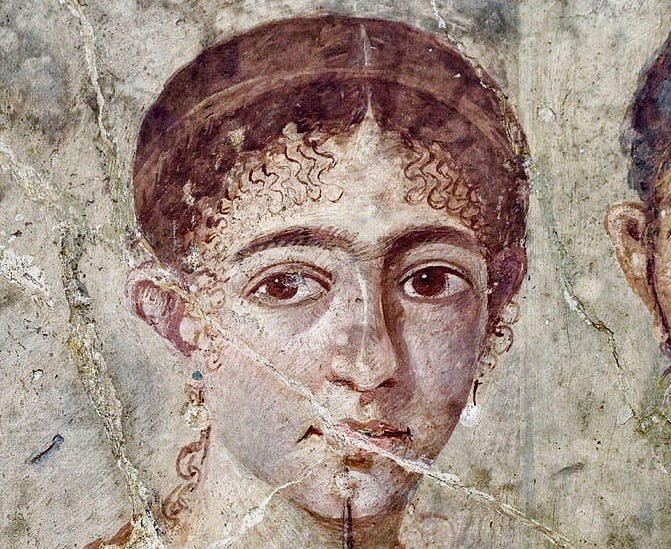
The “new Roman woman”
Secondly, let’s look at what comes just before this passage: “I desire, then, that in every place the men should pray, lifting up holy hands without anger or argument, 9 also that the women should dress themselves in moderate clothing with reverence and self-control, not with their hair braided or with gold, pearls, or expensive clothes, 10 but with good works, as is proper for women who profess reverence for God” (2:8-9, emphasis added).
It is most likely that the author’s intended context is the household unit. The Greek words andras (“men”) and gynaikas (“women”) also mean “husband” and “wife.” Interestingly, we find a nearly identical set of instructions given to wives in 1 Peter 3:1-6.
In the ancient Roman world, the household was the basic unit of city and state. Society itself depended upon good household order. Conventional household codes during that time established that the husband was the head of the family (paterfamilias) and he held all of the authority in the home. Thus, the proper role of the wife was one of “submission” (a word that appears everywhere in ancient household codes, both Christian and non-Christian). If we remember that the first Christian churches met in homes, it is easy to understand how confusion could potentially abound in such environments.
Scholar James D. G. Dunn points out, “Probably in the early days of Christianity there were wives who, in exercise of prophetic or other gifts, had been seen to be teaching or exhorting their husbands… Conceivably, this may have been acceptable in church, but since church was also household, the practice was too easily understood to be subversive of the good order of the household and of the authority of the paterfamilias. For a church concerned to be seen as supportive of what was good for society, the only solution was to conform church order to that of the well-ordered household (hence 3:4-5, 12) and to forbid wives to teach (didasko) or to have authority (authenteo; the meaning could be stronger: “domineer”) over their husbands.”11
As Dunn observes, in keeping with the author’s desire that the Ephesian church live “quiet and peaceable [lives]” (2:2), it seems the advice given in Chapter 2 “is part of an attempt to gain wider respect for the church by ensuring that the then conventional subjection of wife to husband is not disturbed by the greater freedoms brought by the gospel (cf. Gal 3:28).”12 This would be an especially sensitive issue in light of the cultural upheaval that was taking place.
Allow me to suggest a modern example that would replicate this same principle. Imagine yourself being the leader of a Christian missions organization in a predominantly Muslim part of the world (marked, of course, by significant gender inequality). To a large extent, your strategy and methodology should be uniquely suited for that particular culture. To put it frankly, if you desire to be successful in reaching and converting Muslim men in that context, it would not be helpful to utilize women in frontline roles. Obviously, most Western Christians would disagree sharply with how women are regarded and treated socially in certain other parts of the world. But as scholar Phil Towner notes, if we are not willing to shape our work with cultural sensitivity, moving too fast too soon, we could “endanger the church’s witness and credibility.”13
It is imperative that we connect this principle with what was happening in the ancient context of the church in Ephesus. Considering the cultural currents swirling around at that time, the church found it wiser to conform to social tradition for the sake of gospel advancement. Dunn insists that any overt challenge to these conventions “would have been tantamount to calling marriage itself into question and would have been regarded as undermining the very foundations of society and state.”14
In my mind, the argument for this interpretation is clinched by the references to Adam and Eve in vv. 13-15. Seeking to root his instruction in theology, the author supports his counsel by referencing the prior creation of Adam as well as the claim that it was Eve who was deceived and transgressed, not Adam (although this would seem to be in tension with Paul’s account of Adam’s transgression in Romans 5:15-19). Dunn suggests that the theology here “seems to be bending before social convention in spite of the biblical text referred to and the earlier Pauline use of it. (Would the ‘I’ of Rom. 7:11 be debarred from teaching authority by the same logic?)”15
Nevertheless, the usage of the Adam and Eve story supports the argument that the relationship the author has in mind in 1 Timothy 2 is ultimately that of a husband and wife. Verse 15 confirms that idea, harkening back to the Fall and its resulting consequences for Eve (Gen. 3:16). It is most probable that the author is responding to the influence of the fertility cult mentioned above, which regarded childbearing and childrearing with deep contempt. The earlier references to modest dress and behavior would seem to support that notion.
Concluding Thoughts
At this time, these are my best interpretations of these passages in light of the entire New Testament witness. I also draw from what I identify to be the overall trajectory of the New Testament—a trajectory which finds its origin and ultimate fulfillment in the living Word, the Alpha and the Omega, Jesus Christ.
I am also, admittedly, seeing through the lens of my own experience. As mentioned earlier, everyone sees through a particular lens. No one approaches the Bible impervious from the influence of context. We each have a multifaceted social location that frames how we view God, theology, and the Bible. I grew up in the world’s largest Pentecostal denomination—a movement that supports women in preaching and teaching roles. As an aside, I often come across the concern of many complementarians who express that denominations and churches that allow women to preach usually find themselves on a slippery slope towards theological liberalism. These folks need only to observe the witness of the Pentecostal movement (which claims 644 million adherents worldwide) to assuage those concerns.
My life has been immeasurably enriched by the teaching of women, both in the classroom, in literature, and in settings of communal worship. I shudder to think of what great loss there would be in my life without the influence of women like Kimberly Babineaux, Becky Logan, Gerry White, Sherry Lee, Sarah Stabe, and Fleming Rutledge. As far as I’m concerned, if anyone has ever been qualified to teach me on matters of God and theology, it’s women like these who have made invaluable deposits of wisdom into my life through their teaching and example.
As I bring this essay to a close, let me emphasize once again that my desire is not to persuade people over to my position (although I wouldn’t consider that to be such a terrible result). But my hope is to encourage deeper engagement with the scriptures, aided by qualified scholarship, as we also learn to give mutual respect to one another in the midst of our unique spiritual journeys.
Let all that you do be done in love.
1 Corinthians 16:14
(The title image is from the Catacombs of Priscilla.)
Footnotes
While a broader look at the topic of women and leadership is worth discussion, for the sake of brevity I am narrowing the focus of this essay to the issue of women and preaching. ↩︎
We aim to give space for each member of our body to live out whatever conviction they might have in their particular contexts. But in my own unique role of planning the preaching calendar, it is impossible for me to not take a position on this topic. I will either be open to having a woman preach or I will not; either way, I am taking a position. Therefore, we always publish the speaking schedule ahead of time in the weekly bulletin. That way we can honor the convictions of those who in good conscience feel they should not be sitting in a worship service when a woman is preaching. ↩︎
David Scholer. “Women.” In Dictionary of Jesus and the Gospels, edited by Joel B. Green and Scot McKnight. (Downers Grove, IL: Intervarsity Press, 1992). ↩︎
See The Blue Parakeet by Scot McKnight (Grand Rapids, MI: Zondervan, 2018). ↩︎
The same principle would apply for the letter’s named recipients, who would serve as “representative” figures. ↩︎
Issues like this one should highlight the necessity for dedicated students of the Bible (especially pastors!) to engage with the world of serious biblical scholarship. ↩︎
Phil Towner. The Letters to Timothy and Titus. In The New International Commentary on the New Testament. (Grand Rapids, MI: Eerdmans Publishing Co, 2006). ↩︎



 Ryan Post