

Without a doubt, the hottest streaming series this Spring is Apple TV’s psychological thriller Severance, created by Dan Erickson and directed by Ben Stiller. Severance currently boasts a 96% rating on Rotten Tomatoes, and since its premiere on January 17, Season 2 alone has garnered a viewership of over 3 billion streaming minutes. In other words, Severance is a bonafide, all-time hit.

The story revolves around protagonist Mark Scout (played by Adam Scott) who is employed by a local branch of a mysterious global corporation, Lumon Industries. One particular floor of Lumon’s massive office complex is devoted to work so secretive that incoming employees are required to undergo a controversial surgical procedure. The surgery implants a chip into the brain that separates employees’ “work memories” from the rest of their memories.
The effect is that each severed employee (or “innie”) has a life that is carefully curated and dominated by Lumon, with no cognitive connection to one’s life in the outside world. Likewise, the same person outside of the office (or the “outie”) has no recollection of anything that happens at work.
For its severed workers, Lumon has created an entire world of peculiar nomenclature, imagery, customs, routines, and company history to tame its employees’ curiosity and satisfy their longing for meaning. By doing so, Lumon is able to manipulate and control their entire lives.
But as the story progresses, Mark and some of his co-workers intuitively suspect that something is amiss with Lumon and the existence that has been crafted for them. They become increasingly disenchanted with their experience and begin to imagine what life is like beyond their home on the windowless severed floor.

Something similar is happening right now inside the world of American Christianity. Many of us have been handed a severed gospel, largely stripped of what makes the Jesus story so rich, beautiful, and intoxicating.
The gospel is the story of God setting right a world gone wrong. It’s a story that begins with God choosing Abraham and forming his descendants into a great nation through whom God will bless the entire earth. The story continues with the promise that God will establish as king one of David’s descendants who will reign eternally and whose kingdom will encompass the entire earth.
Finally, the story culminates with Jesus of Nazareth, Israel’s messiah, winning an atoning victory on the cross, and being raised and ascended to the Father’s right hand, where he is now enthroned as king of the nations.
Therefore, in response to this good news, the invitation of the gospel is to come under the reign of King Jesus and join the community of believers who (by God’s grace) are together learning to embrace and embody his vision for life as God intends it to be lived. A life that continues on in the age to come.
It is the life Jesus taught and modeled for us. A life characterized by the Sermon on the Mount. A life marked by peace-making, enemy love, patience, and self-denial. And it is through these kinds of cross-shaped communities that God is mending, healing, and saving a lost and broken world.
Yet for many of us, the gospel we’ve inherited sounds quite different. Rather than a story that includes what God is up to in the world right now through the reign of King Jesus, the gospel has been presented to us as a formula for individual salvation regarding how to get to heaven when we die. It’s mechanical. Formulaic. Transactional.
It’s not that this gospel is wrong, per se. It’s just incomplete. It’s a severed gospel. This severance didn’t happen overnight but gradually morphed over several centuries.
It is difficult to locate a definitive starting point, but certainly the Protestant Reformers were instrumental in its development and circulation. John Calvin, in particular, was a trained lawyer who later became a prominent theologian. Calvin’s theological work on soteriology was significantly shaped by his legal background and would become hugely influential in affecting how future generations in the West would understand the gospel.
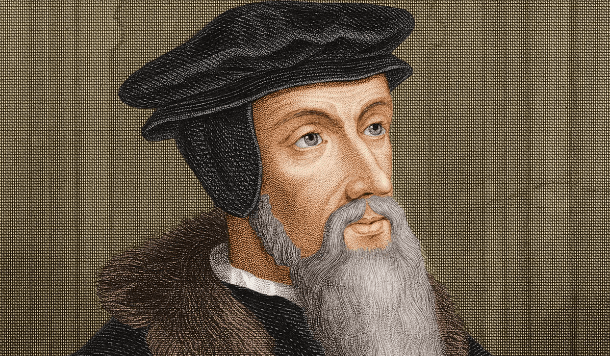
Consequently, people began to view salvation primarily through a legal framework—that guilty sinners can be “acquitted” because of Jesus’ atoning death on the cross and thereby receive forgiveness and salvation.
Indeed, this is true so far as it goes. And certainly the apostle Paul, in his writings, frequently employs legal metaphors. But it isn’t nearly enough to delineate the full scope and nature of salvation and the gospel as described in the story the Bible tells.
The severance process continued throughout the era of colonialism and the transatlantic slave trade. As Western empires sought to conquer and control foreign lands and peoples, the Christian enterprise was often a complicit partner.
As territories were being occupied and exploited, many Christian missionaries and pastors focused their work exclusively on “saving souls.” Colonizers and slaveowners sought to depict conquered and enslaved peoples as something less than human in order to excuse themselves from the ethical demands of Christ’s teaching, allowing them to perpetuate their oppression and exploitation.
Eventually, the American Protestant world would rupture with the Modernist-Fundamentalist controversy in the late 19th and early 20th centuries. A whole host of complicated issues was involved, but at the center of it was a fierce debate over the nature of the gospel.
During the Jim Crow era, many pastors and churches of all kinds were calling attention to the issues of poverty, inequality, and exploitation of workers. Drawing from the Bible, and in particular the teachings of Christ, they contended for a more just and equitable society.
However, some of these Christian leaders and institutions were also departing from orthodox Christian doctrines (such as the virgin birth and the bodily resurrection of Christ). It is also true that in some cases, the emphasis on Christ and the role of Christian worship were becoming deemphasized and displaced altogether.
This movement ignited a strong response from what would become the Fundamentalist movement, which aimed to counteract what was identified as a wholesale departure from normative, orthodox Christianity.
Along with reasserting the creedal foundational doctrines that some Modernists were rejecting, the Fundamentalists sought to declare once and for all a clear exposition of the gospel, centered upon a sin-forgiveness transaction based on Christ’s atoning death that results in the free gift of salvation. This is the gospel, the Fundamentalists would declare.
And thus, the fault lines were created. And they continue to rumble up to the present day.
This is the severed gospel we have inherited. And like Mark Scout and his co-workers on the severed floor, many Christians in America are longing for something more compelling. Dissatisfied with the simplistic script we’ve been handed, we crave to be part of a more beautiful story. A richer, grander metanarrative.
We yearn for a reintegration. Christ’s atoning death, his bodily resurrection, the experience of forgiveness for sin, and the promise of life in the age to come are indispensable components to this story. However, this is also a story that includes God’s longing for the world as it exists right now.
If we truly believe that Jesus is the reigning king of the nations today, then this gospel is not just something to be believed, but as the New Testament states repeatedly, it is to be obeyed.
Thus, the invitation of this good news is not simply to engage in a transaction to secure afterlife salvation, but to enter into and participate in Jesus’ saving, healing work in the world right now.


 Ryan Post