The Making of Biblical Womanhood

Books, Christian history, Church Leadership, Women in Ministry

Last month, as part of a class, I read The Making of Biblical Womanhood by Beth Allison Barr. Barr is a professor of history at Baylor University who specializes in women’s history, church history, and the history of medieval and early modern England.

The book is a fascinating examination of patriarchy, which Barr defines as “a general system that values men and their contributions more than it values women and their contributions.” As the author narrates the history of patriarchy from the very origins of human civilization all the way through the modern era, she specifically focuses on how patriarchy intersects with the Bible and traces the development of “Christian patriarchy” over the centuries up to the present day.

I found it to be quite an enlightening resource. She offers a look at the creation story in early Genesis, contending that patriarchy was not part of God’s original vision for humankind, but it only slithered into the human experience after the Fall. She sees a correlation here with ancient history, describing how as human civilization began to develop with the rise of agriculture, “[b]oth male labor and male power began to be associated with property ownership and the accompanying agricultural work. This led to boys being favored over girls for inheritance and to women becoming increasingly dependent on males who were property owners or agricultural laborers.” As a result, “[w]omen became increasingly dependent upon men as agricultural communities became the heartbeat of human civilization.”

Interestingly, with this in mind, Barr notes how “when God told Eve she would be under her husband’s power, God simultaneously told Adam that agricultural labor would be necessary for human survival.”

“Patriarchy, according to both the Bible and historical record, emerged alongside the emergence of agricultural communities.”

Barr contends that in Genesis 3, rather than prescribing a God-ordained system of male hierarchy, God is actually describing the consequential effects of human brokenness and rebellion.

As the biblical story moves forward, we see how patriarchy continues to shape the narratives as well as the storytellers. According to Barr, “[t]he patriarchy that continues to appear in biblical text is a mere accommodation to the reality of the times and culture; it is not a reflection of the divine ideal for humanity.”

However, despite the inevitable presence of patriarchal attitudes and actions within the biblical narrative, it’s startling how many stories and examples exist within the Bible that actually undermine this perspective. Barr catalogues numerous examples of women leading, teaching, and prophesying all throughout the biblical story, subverting conventional gender roles.

My one critique of the book is that when she deals with 1 Corinthians 14:34-35, she only offers one possible interpretation of this passage. While I appreciate her perspective, I would have preferred for her to at least acknowledge other views that exist, including the one I advocate for in this essay.

However, I found that her history pedigree especially aided her treatment of the “household code” passages in the New Testament (Ephesians 5:22-6:9, Colossians 3:18-4:1, and others). Her knowledge of Roman patriarchal structure (“paterfamilias”) was rather illuminating and helps readers understand how subversive Paul’s instructions were for these early Christians.

“The New Testament household codes tell a story of how the early church was trying to live within a non-Christian, and increasingly hostile, world. They needed to fit in, but they also needed to uphold the gospel of Christ. They had to uphold the frame of Roman patriarchy as much as they could, but they also had to uphold the worth and dignity of each human being made in the image of God. Paul gave them the blueprints to remix Roman patriarchy.”

This is an essential point that deserves reflection. Consider the not-so-hypothetical example of a community of Arab Christians worshipping together within an Islamic state. Wisdom would suggest that within such a patriarchal culture, the lives and practices of these Christians must look radically different than it would in other contexts. The gospel has always been (and must always be) contextualized. Because every culture is unique.

And that includes ancient Greco-Roman culture. What we have in the New Testament is an inspired record of how the earliest churches grappled with how to live forward in God’s new creation while also dwelling within Roman society. Thus, for example, we have instructions regarding slave-master relationships (such as Eph. 6:5-8). Barr asks:

“When we rightly understand that biblical passages discussing slavery must be framed within their historical context and that, through the lens of this historical context, we can better see slavery as an ungodly system that stands contrary to the gospel of Christ, how can we not then apply the same standards to biblical texts about women?”

Good question.

The greatest strength of Barr’s work is her historical survey of church history. She offers plenteous examples of women serving in church leadership roles in every era of church history (“Historically, women have flourished as leaders, teachers, and preachers—even in the evangelical world.”). She traces how Christian patriarchy radically shape-shifted through the medieval era into the Protestant Reformation. She then delineates the sordid history of patriarchy influencing translation choices in modern versions of the Bible.

It’s an eye-opener, for sure. And worth your time and attention.

What I’m reading…

Books, Church Leadership, Theology

For those interested, here’s a quick summary of the books I’ve dived into so far in 2023:

Christianity’s Surprise: A Sure and Certain Hope by C. Kavin Rowe (Abingdon Press, 2020)

A quite short (128 pp.) introduction to the surprising & revolutionary character of Christianity in its original ancient context. In the midst of the much softer, domesticated version of Christianity of the modern West, the author seeks to inspire his readers to re-capture the original allure & beauty of authentic cross-shaped living sustained by the original Christian hope.

Reading Backwards: Figural Christology and the Fourfold Gospel Witness by Richard B. Hays (Baylor University Press, 2016)

The four gospel accounts (Matthew, Mark, Luke, & John) are inextricably linked to the story of the Old Testament. Reading Backwards is a brilliant, accessible, and fairly short work (177 pp.) that traces the connections between each of the four gospel accounts with the Hebrew scriptures. It’s a fascinating summary that I highly recommend to anyone.

Sister Aimee: The Life of Aimee Semple McPherson by Daniel Mark Epstein (Mariner Books, 1994)

I’ve known about Aimee Semple McPherson for many years. But my close proximity to her home & church in L.A. piqued my interest enough to read this biography. It’s a sympathetic and reasonably honest look at her extraordinary and tragic life.

Eat this Book: A Conversation in the Art of Spiritual Reading by Eugene Peterson (Eerdmans, 2009)

For this modern age of 21st Century evangelical pastors, I cannot think of a more important thinker and writer to learn “pastoral theology” from than Eugene Peterson. That has nothing to do with this particular book, but I just feel the need to include that statement. For any pastors who may be reading this, Eugene Peterson is an author well worth your time & attention. His memoir, The Pastor, might be a good place to start.

Anyway, Eat this Book is an inspiring invitation into the practice of approaching the Bible not as a textbook, almanac, or pocket manual, but as an awe-inspiring and expansive story into which we are immersed. I enjoyed it so much, I’m planning on leading a discussion on this book sometime this summer.

Salvation by Allegiance Alone: Rethinking Faith, Works, and the Gospel of Jesus the King by Matthew Bates (Baker Academic, 2017)

This is one I first read a few years ago. I re-read it and led a wonderful group discussion in my office this Spring. We are saved by grace through faith. Amen. But what do these words mean? How do the concepts relate to one another? And how does it cohere with the gospel announcement of the New Testament? In Salvation by Allegiance Alone, New Testament scholar Matthew Bates sheds important light on this subject. The book gets a little dense in some spots, and in particular sections I think he could’ve written much more clearly. But for American evangelicals, he offers some important points that are not only worth our consideration, but are critical for us to grasp in order for Christianity to thrive in the Western world.

Comfortably Numb: The Inside Story of Pink Floyd by Mark Blake (Da Capo Press, 2008)

I don’t just read theology books. This was an enjoyable, bed-time read about a band I’ve always been fascinated with. It inspired me to give my children the experience of the famous Wizard of Oz//Dark Side of the Moon sync effect.

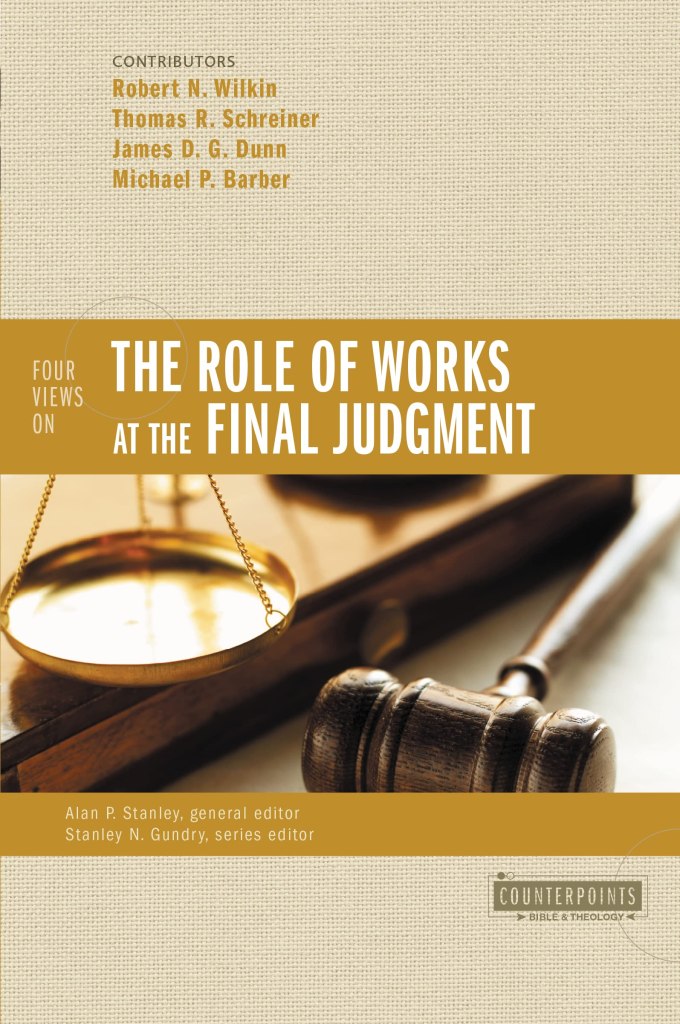
Four Views on the Role of Works at the Final Judgment edited by Alan P. Stanley (Zondervan Academic, 2013)

This book is part of Zondervan’s “Counterpoints” series, in which each book takes on a particular theological subject. Several scholars from different traditions write an essay representing their tradition’s view of the subject. Then the other scholars who represent opposing views each write a short response to one another’s essays. It’s a decent introduction to some of the various viewpoints Christians have on a wide range of topics and why they hold their views. Fresh off of reading Salvation by Allegiance Alone, I decided to dive into this one and wasn’t disappointed.

Currently reading:

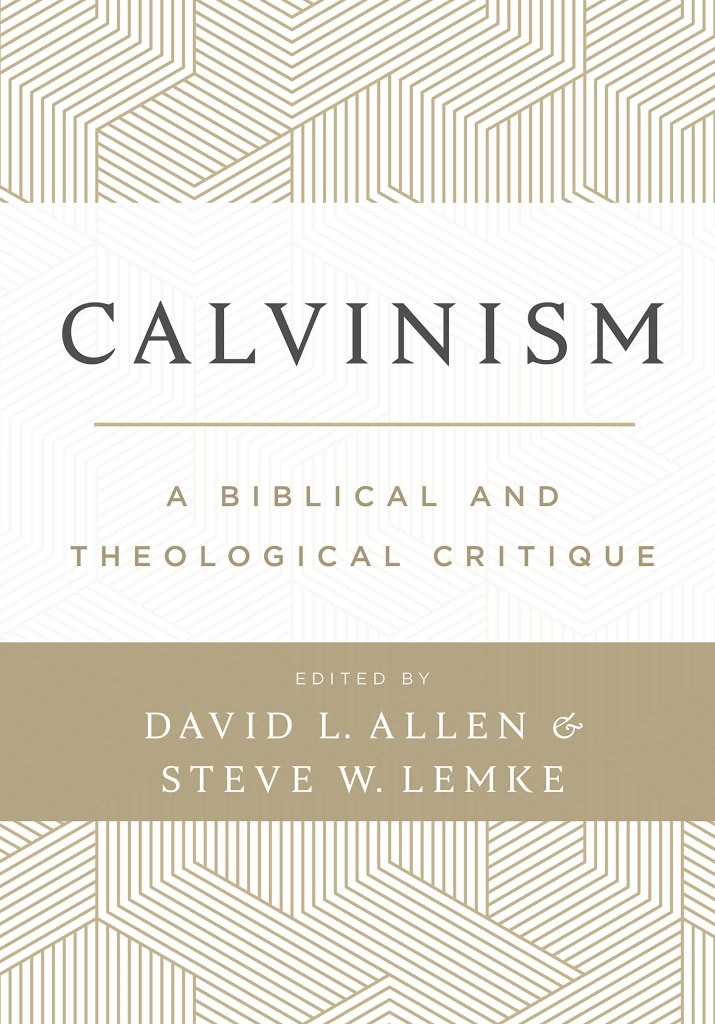
Calvinism: A Biblical and Theological Critique edited by David L. Allen & Steve W. Lemke (B&H Academic, 2022)

I’m about 30% through this one, so I have a ways to go. It provides essays written by various contributors (including two of my favorite scholars, Ben Witherington and Roger Olsen, although I haven’t yet gotten to their essays). While I have significant quibbles with some of the soteriology in this book, so far I find it to be a thorough and effective critique of five-point Calvinism and its fundamental tenets and implications.

Out of the Embers: Faith After the Great Deconstruction by Bradley Jersak (Whitaker House, 2022)

Again, I’m about 30% through this one so far. So I don’t have much feedback yet on the book itself. However, so far I appreciate the way Jersak handles the topic of theological deconstruction in a careful and nuanced fashion. Too many evangelical “thought leaders” don’t really understand the term deconstruction, its wide-range of usage, and how it has become “a thing.” And because of this lack of understanding, many leaders carelessly (and fearfully) make generalizations and lash out, which ironically represents what many are deconstructing from. If none of this is making any sense to you, don’t worry about it. This book really isn’t meant for you. But it’s especially for people who have been going through theological change, those who have experienced deep pain in a church context, and/or those who have walked away from church or Christianity altogether. So far (30% in) I find it to provide compassionate & wise counsel written by someone who has been through it himself and has emerged with an ever-increasing fascination with Jesus.

Excerpt from “Jesus People”

Beatitudes, Books

Like ravens we have gathered around the carcass of cheap grace. From it we have imbibed the poison which has killed the following of Jesus among us.

—Dietrich Bonhoeffer, Discipleship

In 1933, Adolf Hitler and his Nazi Party came to power in Germany and began to systematically transform Germany into a totalitarian state. They eliminated all opposition, and all power was consolidated within the Führer himself. From there, he proceeded to implement his nationalistic, militaristic, and racist policies. As part of his agenda, Hitler saw the local churches of Germany as an important ideological battleground. In order to increase and galvanize his influence, he sought to unify all of the Protestant churches of Germany into one state-sponsored, pro-Nazi Church. And thousands of churches and pastors caved in under the pressure.